Humic acid is a vital component of soil organic matter, formed through the slow microbial decomposition of plant, animal, and microbial residues in various natural environments, including peat. While peat is indeed a significant and commonly utilized source for humic acid, particularly in commercial and agricultural applications, it is not the sole origin. Humic acid is also found in soils, lignite, leonardite, and aquatic systems, arising from complex humification processes that transform organic materials over decades to millennia.
What is Humic Acid?
Humic acid is a high-molecular-weight, dark-colored organic substance that forms part of the humic substances group, alongside fulvic acid and humin. These substances are the end products of humification, a natural process where microorganisms break down organic matter, such as leaves, roots, and dead organisms, under specific environmental conditions. Humic acid is characterized by its solubility: it dissolves in alkaline solutions (e.g., sodium hydroxide) but precipitates in acidic conditions (pH below 2), distinguishing it from fulvic acid (soluble in both acidic and alkaline conditions) and humin (insoluble in both). Rich in carbon (40–60%), oxygen (30–40%), hydrogen (3–6%), and nitrogen (1–4%), humic acid enhances soil fertility by improving nutrient retention, water-holding capacity, and microbial activity.
Humic Acid’s Derivation from Peat
Peat, formed in waterlogged, oxygen-poor environments like bogs, marshes, and wetlands, is a major source of humic acid. Peat consists of partially decomposed plant material, primarily sphagnum moss, sedges, and other vegetation, preserved under anaerobic conditions that slow complete decomposition. Over centuries, these conditions promote the accumulation of organic matter, with humic substances comprising 60–85% of peat’s organic content. Humic acid in peat is derived from the breakdown of lignocellulosic components (e.g., cellulose, lignin) in plant tissues, transformed by microbial activity into complex, stable polymers.
Peat’s high organic matter content makes it an ideal raw material for humic acid extraction, particularly for commercial purposes. Regions like northern Europe (e.g., Ireland, Finland), Russia, Canada, and parts of the United States have extensive peatlands, which are often mined for humic acid used in agriculture, horticulture, and environmental applications. The humic acid in peat tends to have a higher molecular weight and greater aromaticity (complex carbon structures) compared to soil-derived humic acid, due to the prolonged, oxygen-limited decomposition process in peatlands.
Other Sources of Humic Acid
While peat is a key source, humic acid originates from multiple environments through similar humification processes:
- Soils: The primary natural reservoir, where humic acid forms in the topsoil (0–20 cm) from decomposing roots, leaves, and microbial biomass. Soil humic acid content varies widely, from 1–5% in mineral soils (e.g., sandy loams) to 20–50% in organic-rich soils (e.g., forest or grassland soils).
- Lignite and Leonardite: These are oxidized, coal-like materials derived from ancient peat deposits. Leonardite, a soft, brownish material found near lignite deposits, is particularly rich in humic acid (up to 90% by weight) and is widely used in commercial extraction due to its high yield. Leonardite forms over millions of years as peat undergoes geological compression and oxidation.
- Aquatic Systems: Humic acid occurs in rivers, lakes, and oceans, derived from dissolved organic matter (e.g., plant debris washed into water bodies). However, its concentration is lower than in terrestrial sources, making aquatic extraction less common.
- Compost and Manure: Decomposed organic waste, such as compost or animal manure, can also yield humic acid, though its composition differs from peat- or soil-derived humic acid due to shorter decomposition times.
Formation of Humic Acid in Peat
The formation of humic acid in peat begins with the accumulation of plant material in waterlogged environments, where low oxygen levels inhibit complete microbial decomposition. Key processes include:
- Plant Decay: Plants like sphagnum moss, reeds, or sedges die and accumulate in wetlands. Their lignocellulosic components (cellulose, hemicellulose, lignin) serve as the primary organic precursors.
- Microbial Activity: Bacteria, fungi, and actinomycetes partially break down these materials, producing intermediate compounds like polyphenols, polysaccharides, and amino acids.
- Humification: Over time, these intermediates polymerize into complex humic substances through chemical and biological reactions. Humic acid forms as a high-molecular-weight fraction, stabilized by its resistance to further microbial degradation.
- Environmental Conditions: Waterlogged, acidic (pH 3–5), and anaerobic conditions in peatlands slow oxidation, preserving organic matter and favoring humic acid accumulation.
This process can take centuries to millennia, resulting in peat deposits rich in humic acid, with older, deeper layers containing more transformed, stable compounds compared to younger surface layers.
Extraction of Humic Acid from Peat
Extracting humic acid from peat follows a similar protocol to soil extraction, leveraging its solubility in alkaline conditions. Below is a detailed, accessible procedure tailored for peat, based on standard methods like those from the International Humic Substances Society (IHSS), but explained clearly for a broad audience.
Materials and Equipment
- Peat Sample: Air-dried, sieved to <2 mm to remove debris.
- Chemicals:
- Sodium hydroxide (NaOH, 0.1 M or 0.5 M solution).
- Hydrochloric acid (HCl, 6 M for pH adjustment, 0.1 M for washing).
- Distilled or deionized water.
- Sodium chloride (NaCl, optional for specific protocols).
- Equipment:
- Laboratory glassware (beakers, flasks, centrifuge tubes).
- Centrifuge (3000–5000 rpm) or filtration system (filter paper, funnels).
- pH meter for accurate pH control.
- Magnetic stirrer or orbital shaker.
- Nitrogen gas cylinder (to prevent oxidation).
- Dialysis bags (3.5–12 kDa cutoff, for purification).
- Freeze-dryer or low-temperature oven (<40°C) for drying.
- Desiccator for storage.
Step-by-Step Extraction Process
- Peat Sample Preparation:
- Collect peat from a bog, marsh, or commercial peat source. Surface peat (0–30 cm) is often richer in less-decomposed material, while deeper layers yield more humified humic acid.
- Air-dry the peat at room temperature for 3–7 days to remove moisture. Avoid oven-drying above 40°C, as heat can degrade organic matter.
- Sieve through a 2 mm mesh to remove roots, twigs, or stones. Weigh 20–50 g of peat, as its high organic content requires less sample than mineral soils.
- Pre-Treatment to Remove Impurities:
- Add 0.1 M HCl to the peat in a 1:10 weight-to-volume ratio (e.g., 200 mL HCl per 20 g peat) to dissolve carbonates, ash, or soluble minerals.
- Stir for 1–2 hours using a magnetic stirrer or shaker.
- Centrifuge (3000–5000 rpm, 20 minutes) or filter through medium-grade filter paper. Discard the supernatant and retain the peat residue.
- Rinse the residue with distilled water 2–3 times until the rinse water’s pH is near neutral (pH 6–7).
- Alkaline Extraction:
- Add 0.1 M NaOH to the pre-treated peat in a 1:10 ratio (e.g., 200 mL NaOH per 20 g peat). NaOH dissolves humic and fulvic acids, releasing them from the peat matrix.
- Stir continuously for 4–24 hours. Peat’s high organic content may require shorter extraction times (4–12 hours) compared to soils, but longer times ensure higher yields.
- Perform this step under a nitrogen gas atmosphere or in a sealed container to prevent oxidation, which can alter humic acid’s structure.
- Centrifuge or filter the mixture to collect the dark supernatant (containing humic and fulvic acids) and discard the solid residue (humin and insoluble matter).
- Precipitation of Humic Acid:
- Slowly add 6 M HCl to the supernatant while stirring, lowering the pH to 1–2. Use a pH meter to ensure accuracy, as precise pH control is critical.
- At pH 1–2, humic acid precipitates as a dark, gelatinous solid, while fulvic acid remains in solution.
- Let the mixture stand for 12–24 hours at room temperature to complete precipitation. Cover the container to avoid contamination.
- Centrifuge or filter to collect the humic acid precipitate. Save the supernatant for fulvic acid extraction, if desired.
- Purification:
- Redissolve the precipitate in 0.1 M NaOH (50–100 mL) and reprecipitate by adding 6 M HCl to pH 1–2. Repeat this cycle 1–2 times to remove residual fulvic acid and impurities.
- Wash the precipitate with 0.1 M HCl (2–3 times, 50 mL each) to remove salts, followed by distilled water (3–5 washes) until the wash water is neutral.
- Optional: Dialyze the redissolved humic acid in a dialysis bag (3.5–12 kDa cutoff) against distilled water for 24–48 hours, changing the water every 6–12 hours, to achieve high purity by removing low-molecular-weight impurities.
- Drying and Storage:
- Dry the humic acid using a freeze-dryer for best preservation of its chemical structure. Alternatively, air-dry or use a low-temperature oven (<40°C).
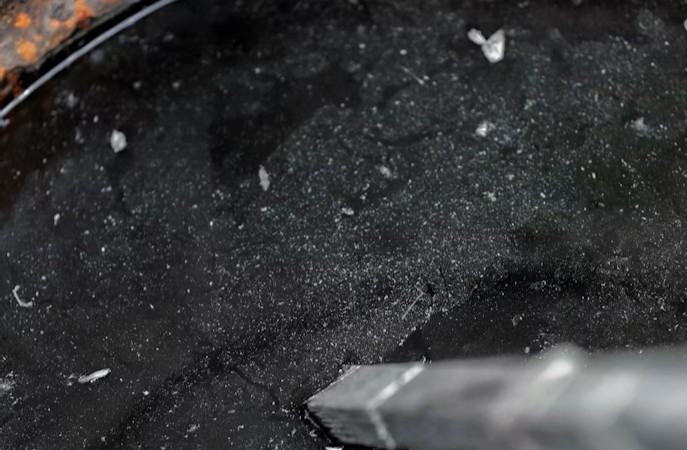
- The dried product appears as a dark brown or black powder or flakes.
- Store in an airtight container in a desiccator to protect from moisture and degradation.
Yield and Characteristics
- Peat typically yields 5–20% humic acid by dry weight, significantly higher than mineral soils (0.5–5%), due to its organic richness.
- Peat-derived humic acid often has a higher carbon content and aromaticity, reflecting the prolonged humification in anaerobic conditions.
- Analyze the product using techniques like elemental analysis (C, H, N, O content), Fourier-transform infrared spectroscopy (FTIR) for functional groups, or ultraviolet-visible spectroscopy (UV-Vis) for purity (e.g., E4/E6 ratio).
Applications of Peat-Derived Humic Acid
Peat-derived humic acid is widely used due to its high yield and consistent properties:
- Agriculture:
- As a soil conditioner to improve water retention, aeration, and nutrient availability.
- As a fertilizer additive to enhance plant uptake of nutrients like nitrogen and phosphorus.
- To stimulate soil microbial activity, promoting root growth and soil health.
- Environmental Science:
- Studying carbon sequestration in peatlands, which store significant carbon, aiding climate change mitigation.
- Binding heavy metals or organic pollutants for soil and water remediation.
- Industry:
- In organic fertilizers, compost teas, or liquid humic products for farming and horticulture.
- In cosmetics (e.g., skincare products) for its antioxidant and anti-inflammatory properties.
- In wastewater treatment to remove contaminants like dyes or heavy metals.
- Research:
- Characterizing peatland ecosystems to assess their ecological and carbon storage roles.
- Comparing humic acid properties across sources (e.g., peat vs. soil vs. leonardite).
Advantages of Peat as a Source
- High Humic Content: Peat’s 60–85% organic matter content ensures high humic acid yields, making it cost-effective for commercial extraction.
- Consistency: Peat deposits, especially from established bogs, provide uniform material compared to variable soil types.
- Commercial Availability: Peat is widely harvested in regions like Ireland, Canada, and Russia, supporting large-scale production of humic acid products.
Challenges and Considerations
- Environmental Impact: Peat extraction can degrade peatlands, which are critical carbon sinks and biodiversity hotspots. Sustainable harvesting or alternative sources (e.g., leonardite) are increasingly considered.
- Structural Variability: Peat humic acid’s properties depend on the peat’s age, plant composition, and decomposition stage, requiring characterization for specific applications.
- Extraction Challenges:
- Peat’s fibrous nature may clog filters or complicate centrifugation, requiring robust equipment.
- High fulvic acid content in some peats necessitates thorough purification to isolate pure humic acid.
- Oxidation Risk: Prolonged exposure to air during extraction can alter humic acid’s structure, necessitating nitrogen gas or sealed systems.
- Contamination: Impurities like ash or minerals in peat must be removed during pre-treatment to ensure purity.
Alternative Sources and Methods
While peat is a primary source, other materials and methods offer flexibility:
- Leonardite: Yields higher humic acid content (up to 90%) and is more sustainable than peat mining, as it’s a byproduct of lignite mining.
- Soils: Require larger samples due to lower organic content but are abundant and widely studied.
- Alternative Extraction:
- Use potassium hydroxide (KOH) instead of NaOH to reduce sodium contamination.
- Apply ultrasound or microwave-assisted extraction to speed up the process, though these may alter humic acid’s structure.
- Use organic solvents (e.g., ethanol) for specific fractions, though less common for humic acid.
Safety Guidelines
- Chemical Handling: NaOH and HCl are corrosive. Wear gloves, goggles, and a lab coat, and work in a fume hood.
- Waste Disposal: Neutralize and dispose of chemical waste per local regulations.
- Equipment Safety: Operate centrifuges and shakers according to guidelines to prevent accidents.
Tips for Extraction
- Sample Selection: Choose peat from deeper layers for higher humic acid content, but test organic matter content first.
- Simplify for Small Scale: Skip dialysis for non-research applications, using extra washing steps instead.
- Monitor pH Closely: Use a calibrated pH meter to ensure the precipitation step occurs at pH 1–2.
- Prevent Clogging: Pre-sieve peat thoroughly to avoid fibrous material clogging filters.
Conclusion
Humic acid, while significantly derived from peat, is a versatile organic substance formed across various environments through humification. Peat’s high organic content makes it a preferred source for commercial and research purposes, with extraction involving alkaline dissolution, acid precipitation, and purification. The resulting humic acid supports agriculture, environmental remediation, and industry, but sustainable sourcing is critical due to peatlands’ ecological importance.