Comprehensive Overview of Anti-Flocculation Potassium Fulvate
Anti-flocculation potassium fulvate is a specialized organic compound derived from the potassium salt of fulvic acid, typically sourced from natural materials such as leonardite, a soft lignite coal rich in humic substances. Unlike standard potassium fulvate, this advanced variant is engineered to exhibit exceptional solubility and stability, particularly in challenging conditions such as hard water or low pH environments. Its “anti-flocculation” property ensures it remains fully dissolved without forming precipitates or sediments, even when mixed with high concentrations of divalent ions like calcium (Ca²⁺) or magnesium (Mg²⁺). This makes it a highly effective and versatile product, predominantly used in agriculture but with potential applications in other fields such as cosmetics and animal nutrition.
Chemical and Physical Properties
Potassium fulvate is a subset of humic substances, characterized by its low molecular weight (typically 300–2,000 Da) and a high density of functional groups, including carboxyl (-COOH), hydroxyl (-OH), and phenolic hydroxyl groups. These groups confer strong chelating and ion-exchange capabilities, enabling the compound to bind with nutrients and facilitate their uptake by plants. The anti-flocculation variant is produced through advanced processing techniques, such as sulfation or proprietary chemical modifications, which enhance its solubility and prevent aggregation in solution. Key properties include:
- High Solubility in Hard Water: Anti-flocculation potassium fulvate remains stable in water with hardness levels up to 25–40°DH (approximately 445–712 ppm CaCO₃ equivalent), compared to standard potassium fulvate, which often flocculates above 10°DH. This is critical for agricultural applications in regions with hard water sources.
- Stability Across pH Ranges: It dissolves completely in acidic conditions (pH as low as 4) and alkaline environments, maintaining clarity and homogeneity without layering or precipitation, even after extended periods (e.g., 24 hours or more).
- Anti-Flocculation Mechanism: The compound’s resistance to flocculation stems from sufficient sulfation or other chemical modifications during production, which prevent interactions between fulvate molecules and divalent cations that typically cause clumping in standard formulations.
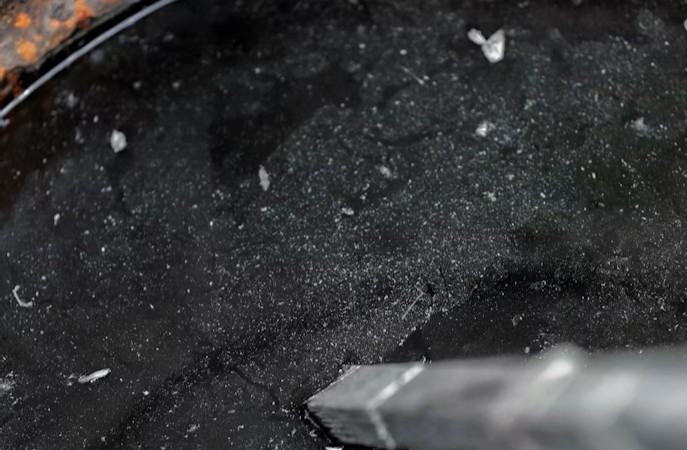
- Appearance and Composition: Typically available as a black or dark brown powder, flake, or liquid, with fulvic acid content ranging from 50–80% and potassium (as K₂O) at 8–12%. It has low heavy metal content (e.g., Hg <2 mg/kg, As <10 mg/kg) and complies with agricultural standards like HG/T5334-2018.
| Property | Standard Potassium Fulvate | Anti-Flocculation Potassium Fulvate |
|---|---|---|
| Hard Water Tolerance | Flocculates at >10°DH | Stable up to 40°DH |
| Solubility in Acid (pH 4) | Partial, may precipitate | Fully soluble, no precipitation |
| Stability After Mixing | Sediments within hours | Stable for days, no sediments |
| Nutrient Chelation | Moderate | Enhanced due to more functional groups |
| pH Buffering Capacity | Limited | Strong, adjusts soil pH effectively |
Production and Source Materials
Anti-flocculation potassium fulvate is derived from leonardite or other humic-rich materials through a multi-step process involving extraction, purification, and chemical modification. The raw material is treated with potassium hydroxide to form the potassium salt of fulvic acid, followed by additional processing to enhance its anti-flocculation properties. Manufacturers like Saint Humic Acid or Jingfeng Humic Acid employ proprietary techniques, such as controlled sulfation, to ensure the product’s stability in diverse water chemistries. The result is a product that outperforms standard potassium fulvate or humate in terms of solubility and application efficiency.
Applications in Agriculture
The primary application of anti-flocculation potassium fulvate is in agriculture, where it serves as a bio-stimulant, soil conditioner, and fertilizer enhancer. Its stability and compatibility with modern irrigation systems make it particularly valuable. Key uses include:
- Fertilizer Additive:
- Mixed with NPK (nitrogen, phosphorus, potassium) fertilizers or trace elements (e.g., iron, zinc, manganese) for foliar sprays, drip irrigation, or fertigation.
- Enhances nutrient availability by chelating minerals, preventing nutrient lockup in soils, and improving plant uptake.
- Compatible with irrigation systems due to its non-clogging nature, unlike standard humates that may precipitate and block emitters.
- Plant Growth Promotion:
- Stimulates seed germination, root development, and overall plant vigor by enhancing metabolic processes like photosynthesis and enzyme activity.
- Increases resistance to environmental stresses such as drought, salinity, and cold temperatures.
- Promotes microbial activity in the rhizosphere, fostering a healthy soil ecosystem.
- Soil Amendment:
- Reduces soil salinity by binding excess salts and facilitating their leaching from the root zone.
- Buffers soil pH, neutralizing both acidic and alkaline soils to create optimal conditions for plant growth.
- Improves soil structure, water retention, and cation exchange capacity (CEC), enhancing nutrient retention and availability.
- Heavy Metal Detoxification:
- Chelates toxic heavy metals (e.g., lead, cadmium) in contaminated soils, reducing their bioavailability and mitigating plant toxicity.
Testing and Quality Assurance
To verify its anti-flocculation properties, manufacturers recommend simple tests, such as dissolving 5 grams of the product in 200 ml of groundwater (or water with known hardness) and observing for clarity over 24 hours. No precipitation or cloudiness should occur, even in hard water. Quality products adhere to strict standards for purity, with minimal heavy metal content and high fulvic acid purity, ensuring safety for agricultural use.
Comparison with Related Compounds
Anti-flocculation potassium fulvate is distinct from related compounds like potassium humate or sodium humate:
- Potassium Humate: Derived from humic acid, it has larger molecular chains (2,000–10,000 Da) and is less soluble in hard water or acidic conditions, often leading to flocculation. It is better suited for soil applications than foliar sprays.
- Sodium Humate: Similar to potassium humate but uses sodium as the cation. It is less plant-friendly due to potential sodium accumulation in soils.
- Standard Potassium Fulvate: Lacks the enhanced anti-flocculation properties, making it less effective in hard water or modern irrigation systems.
The smaller molecular size of fulvic acid in anti-flocculation potassium fulvate allows for better penetration into plant tissues and superior nutrient transport compared to humic acid-based products.
Non-Agricultural Applications
While agriculture is the primary domain, anti-flocculation potassium fulvate has emerging applications in other fields:
- Cosmetics: Its antioxidant and anti-inflammatory properties make it a candidate for skincare formulations, where it may help neutralize free radicals and improve skin health.
- Animal Nutrition: Used as a feed additive to enhance digestion, nutrient absorption, and immune function in livestock.
- Environmental Remediation: Applied in bioremediation to bind pollutants in soil or water, aiding in environmental cleanup efforts.
Practical Considerations for Use
- Application Methods: Can be applied via foliar spray (0.5–2 g/L), drip irrigation (2–5 kg/ha), or soil drench (5–10 kg/ha), depending on crop needs and soil conditions.
- Compatibility: Mixes well with most fertilizers and pesticides, but compatibility tests are recommended for new combinations.
- Storage: Store in a cool, dry place to maintain product integrity. Liquid formulations should be sealed to prevent evaporation or contamination.
- Procurement: Source from reputable suppliers adhering to standards like HG/T5334-2018. Verify certifications for organic farming if required.
Conclusion
Anti-flocculation potassium fulvate represents a significant advancement over standard potassium fulvate and humate products due to its superior solubility, stability, and versatility. Its ability to remain effective in hard water and across a wide pH range makes it an ideal choice for modern agricultural practices, particularly in regions with challenging water or soil conditions. By enhancing nutrient uptake, improving soil health, and promoting plant resilience, it contributes to sustainable farming and higher crop yields.