Humic acid extracted through alkaline methods is a complex, heterogeneous mixture of organic compounds derived from the microbial decomposition of plant, animal, and microbial residues in organic-rich materials such as soil, peat, leonardite, lignite, or compost. The alkaline extraction process, which typically employs sodium hydroxide (NaOH) or potassium hydroxide (KOH), is a standard technique for isolating humic acid due to its ability to dissolve these substances from insoluble matrices. Because humic acid is not a single compound but a polydisperse mixture, its molecular weight varies widely, typically ranging from a few hundred to several million daltons (Da). This variability depends on factors such as the source material, extraction conditions, purification steps, and analytical methods used for measurement.
Alkaline Extraction Process in Detail
The alkaline extraction of humic acid is a well-established method designed to separate humic substances from their source material. The process typically follows these steps:
- Sample Collection and Preparation: The source material—such as soil from agricultural fields, peat from wetlands, leonardite from oxidized coal deposits, or compost from organic waste—is collected, air-dried, and often ground into fine particles to increase the surface area for extraction. This step ensures efficient interaction between the material and the extracting solution.
- Alkaline Extraction: The prepared material is mixed with a dilute alkaline solution, commonly 0.1–0.5 M NaOH or KOH, at a pH of 10–12. The high pH deprotonates acidic functional groups (e.g., carboxyl and phenolic groups) on humic acid molecules, rendering them soluble in the aqueous solution. This step is typically conducted under stirring for several hours (4–24 hours) at room temperature, though some protocols use mild heating to enhance extraction efficiency.
- Separation of Insoluble Residues: The mixture is filtered or centrifuged to separate the soluble humic substances (humic acid and fulvic acid) from insoluble components, such as humin (insoluble at all pH levels) and mineral particles like sand or clay.
- Precipitation of Humic Acid: The alkaline extract, containing both humic and fulvic acids, is acidified with a strong acid, typically hydrochloric acid (HCl), to a pH below 2 (often pH 1–2). At this low pH, humic acid becomes insoluble and precipitates out, while fulvic acid, which is more soluble, remains in the supernatant.
- Purification: The precipitated humic acid is collected by centrifugation or filtration, washed with distilled water or dilute acid to remove residual salts and impurities, and often redissolved in a dilute alkaline solution and reprecipitated to enhance purity. The final product is dried (e.g., air-dried, oven-dried, or lyophilized) for storage or analysis.
- Optional Fractionation: In research or specialized applications, the humic acid may be further fractionated using techniques like ultrafiltration or dialysis to isolate specific molecular weight ranges or to remove low molecular weight contaminants.
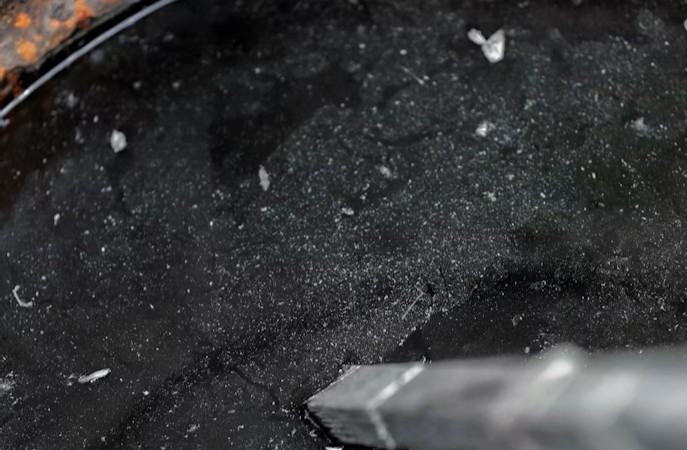
This process yields a dark brown to black solid, reflecting the complex molecular structure of humic acid, which includes aromatic rings, aliphatic chains, and functional groups such as carboxyl (-COOH), hydroxyl (-OH), phenolic, and carbonyl groups. The alkaline extraction method, while effective, can influence the molecular weight by disrupting molecular aggregates or modifying chemical bonds, as discussed below.
Molecular Weight of Alkaline-Extracted Humic Acid
Due to its polydisperse nature, alkaline-extracted humic acid does not have a single, well-defined molecular weight. Instead, its molecular weight spans a broad range, typically from 500 to over 1,000,000 Da, with specific ranges and averages varying based on the source material and extraction conditions. Below is a detailed breakdown of the molecular weight characteristics:
- Low Molecular Weight Fractions (500–5,000 Da):
- These fractions are commonly found in humic acids extracted from less humified sources, such as surface soils, compost, or organic-rich sediments. These materials undergo less extensive decomposition, resulting in simpler, smaller molecules.
- Low molecular weight humic acids are often more bioavailable, making them effective in applications like plant growth stimulation, where they can enhance nutrient uptake or interact with root systems.
- Alkaline extraction may preferentially dissolve these smaller molecules, as the high pH disrupts weaker intermolecular interactions, releasing lower molecular weight components.
- Intermediate Molecular Weight Fractions (5,000–50,000 Da):
- This range is typical for humic acids extracted from moderately humified soils or organic sediments, such as those found in agricultural fields or forest soils.
- These fractions represent a balance between smaller, more soluble molecules and larger, more polymerized structures. They are commonly reported in studies of soil-derived humic acids and are often used in agricultural and environmental applications.
- The alkaline extraction process may slightly reduce the apparent molecular weight in this range by breaking down aggregates or hydrolyzing certain bonds, such as ester linkages.
- High Molecular Weight Fractions (50,000–1,000,000+ Da):
- Humic acids from highly humified sources, such as leonardite, lignite, or ancient peat deposits, often exhibit molecular weights in this range. These materials have undergone extensive geological transformation, leading to highly polymerized, complex structures.
- These fractions are characterized by extensive cross-linking and aromaticity, contributing to their stability and ability to form aggregates.
- Alkaline extraction can partially dissociate these aggregates, but incomplete dissociation or reformation during analysis may result in high molecular weight measurements.
- Average Molecular Weights:
- For soil-derived humic acids, studies often report average molecular weights between 5,000 and 20,000 Da when extracted using alkaline methods.
- For leonardite or lignite-derived humic acids, averages may range from 10,000 to 100,000 Da, reflecting their greater degree of polymerization.
- These averages are highly dependent on the analytical method used, as discussed below.
- Comparison to Other Extraction Methods:
- Alkaline extraction tends to yield humic acid with a slightly lower apparent molecular weight compared to methods like water extraction or chelating agent extraction. The high pH of alkaline solutions can disrupt hydrogen bonds, van der Waals forces, or metal-mediated complexes, breaking down larger aggregates into smaller units.
- However, if aggregates persist or reform during analysis (e.g., in neutral or acidic conditions), the apparent molecular weight may be overestimated.
Factors Influencing Molecular Weight
The molecular weight of alkaline-extracted humic acid is influenced by several factors, which contribute to its variability:
- Source Material:
- Soil: Humic acids from agricultural or forest soils typically have moderate molecular weights (5,000–50,000 Da) due to ongoing microbial activity and relatively recent organic matter inputs. The degree of humification in soils is often lower than in geological materials.
- Peat: Peat-derived humic acids, formed under anaerobic conditions in wetlands, may have molecular weights ranging from 10,000 to 100,000 Da, reflecting a higher degree of humification.
- Leonardite and Lignite: These coal-derived materials, formed over millions of years, yield humic acids with higher molecular weights (50,000–1,000,000 Da) due to extensive polymerization and cross-linking.
- Compost: Humic acids from composted organic matter tend to have lower molecular weights (500–10,000 Da) due to the relatively short decomposition period and microbial activity.
- Extraction Conditions:
- Alkaline Concentration: Higher concentrations of NaOH or KOH (e.g., >0.5 M) can break down molecular aggregates or hydrolyze labile bonds (e.g., ester or ether linkages), reducing the apparent molecular weight. Lower concentrations (e.g., 0.1 M) may preserve larger structures.
- Extraction Time: Prolonged extraction (e.g., >24 hours) may degrade larger molecules, leading to a shift toward lower molecular weights. Shorter extraction times may retain higher molecular weight fractions.
- Temperature: Elevated temperatures during extraction can enhance solubility but may also cause molecular degradation, reducing molecular weight. Room-temperature extractions are standard to minimize such effects.
- pH Control: The pH during extraction (typically 10–12) and precipitation (pH < 2) affects molecular interactions. Overly harsh alkaline conditions may fragment molecules, while incomplete acidification may leave residual aggregates.
- Aggregation Behavior:
- Humic acid molecules can form micelles or aggregates in solution, particularly in the presence of metal ions (e.g., Ca²⁺, Fe³⁺) or at neutral pH. These aggregates can inflate the apparent molecular weight during analysis.
- Alkaline extraction partially dissociates these aggregates by deprotonating acidic groups, but reformation can occur during precipitation or analysis, especially if the solution is neutralized or contains salts.
- Purification Steps:
- Repeated precipitation and washing can remove lower molecular weight impurities, such as fulvic acid or small organic molecules, shifting the molecular weight distribution toward higher values.
- Conversely, excessive washing or harsh conditions may remove smaller humic acid fractions, altering the distribution.
- Environmental Factors:
- The conditions under which the source material formed (e.g., soil pH, moisture, temperature, microbial activity) influence the degree of humification and molecular complexity. For example, soils with high microbial activity may produce humic acids with lower molecular weights due to ongoing degradation.
- Analytical Variability:
- The method used to measure molecular weight significantly affects the reported values, as different techniques capture different aspects of the molecular weight distribution (see below).
Analytical Methods for Molecular Weight Determination
Determining the molecular weight of alkaline-extracted humic acid is complex due to its heterogeneity and the influence of extraction and analytical conditions. The following methods are commonly used, each with its strengths and limitations:
- Size-Exclusion Chromatography (SEC):
- SEC separates molecules based on their size as they pass through a porous column, with larger molecules eluting first. The molecular weight is estimated by comparing elution times to standards (e.g., polystyrene sulfonates).
- Limitations: Humic acid may interact with the column material, and aggregation in the eluent (e.g., due to pH or ionic strength) can lead to overestimation of molecular weight. Calibration standards may not accurately represent humic acid’s structure.
- Typical Results: For alkaline-extracted humic acid, SEC often reports molecular weights in the range of 5,000–50,000 Da for soil-derived samples, with higher values for leonardite-derived samples.
- Ultrafiltration:
- This method uses membranes with specific molecular weight cutoffs (e.g., 1,000, 10,000, or 100,000 Da) to fractionate humic acid into size classes.
- Limitations: It provides broad molecular weight ranges rather than precise values and is sensitive to membrane clogging or molecular interactions.
- Typical Results: Alkaline-extracted humic acid may show significant fractions in the 1,000–100,000 Da range, depending on the source.
- Mass Spectrometry:
- Techniques like matrix-assisted laser desorption/ionization (MALDI-MS) or electrospray ionization (ESI-MS) ionize humic acid molecules and measure their mass-to-charge ratio.
- Limitations: Ionization efficiency varies, and high molecular weight fractions may be underrepresented if they ionize poorly. Sample preparation (e.g., solvent choice) can also affect results.
- Typical Results: Mass spectrometry often detects lower molecular weight fractions (500–10,000 Da) but may miss larger aggregates.
- Light Scattering:
- Dynamic light scattering (DLS) or static light scattering measures molecular size and weight based on the scattering of light by particles in solution.
- Limitations: Results are highly sensitive to aggregation, pH, and ionic strength. Aggregates can lead to overestimation of molecular weight.
- Typical Results: This method may report higher molecular weights (e.g., 50,000–1,000,000 Da) for alkaline-extracted humic acid, especially if aggregates are present.
- Vapor Pressure Osmometry:
- This technique estimates molecular weight by measuring changes in vapor pressure caused by dissolved molecules.
- Limitations: It is less commonly used for humic acid due to its complexity and the need for pure, non-aggregating samples.
- Typical Results: When applied, it typically yields molecular weights in the range of 5,000–20,000 Da for soil-derived humic acid.
Each method provides a different perspective on the molecular weight distribution, and discrepancies are common due to humic acid’s complexity and the influence of alkaline extraction. For example, SEC and light scattering may overestimate molecular weight if aggregates persist, while mass spectrometry may underestimate it if larger molecules are not ionized effectively.
Practical Applications
The molecular weight of alkaline-extracted humic acid is a critical parameter in its applications across various fields:
- Agriculture:
- Soil Amendments and Fertilizers: Low molecular weight fractions (500–5,000 Da) are highly bioavailable, promoting plant growth by enhancing nutrient uptake, stimulating root development, and improving soil microbial activity. Higher molecular weight fractions (10,000–100,000 Da) contribute to soil structure, water retention, and cation exchange capacity, improving soil fertility over the long term.
- Foliar Applications: Lower molecular weight humic acids are preferred for foliar sprays due to their solubility and ability to penetrate plant tissues.
- Commercial Products: Many commercial humic acid products, often derived from leonardite via alkaline extraction, are characterized by higher molecular weights (10,000–100,000 Da) for stability and soil conditioning.
- Environmental Science:
- Pollutant Binding: Humic acid’s molecular weight affects its ability to bind heavy metals (e.g., Pb²⁺, Cu²⁺) and organic pollutants (e.g., pesticides). Higher molecular weight fractions have more functional groups, increasing their binding capacity, while lower molecular weight fractions are more mobile in aquatic systems, influencing pollutant transport.
- Carbon Cycling: Humic acid contributes to soil carbon sequestration, and its molecular weight affects its stability and resistance to microbial degradation.
- Industrial Applications:
- Water Treatment: Humic acid is used to remove contaminants from water. Lower molecular weight fractions are preferred for their solubility, while higher fractions may enhance flocculation.
- Drilling Fluids: In oil and gas drilling, humic acid’s viscosity and stability depend on its molecular weight, with higher fractions providing better performance in stabilizing drilling muds.
- Cosmetics and Pharmaceuticals: Low molecular weight humic acids are used in some formulations for their antioxidant or bioactive properties.
- Research:
- In scientific studies, the molecular weight of alkaline-extracted humic acid is characterized to understand its chemical behavior, interactions with other substances, and environmental roles. Standardized protocols, such as those from the International Humic Substances Society (IHSS), are often used to ensure consistency.
Limitations and Considerations
Several limitations and considerations arise when studying or using alkaline-extracted humic acid:
- Extraction Artifacts:
- The high pH of alkaline extraction (10–12) can disrupt molecular aggregates, hydrolyze labile bonds (e.g., esters), or alter functional groups, potentially reducing the molecular weight compared to the native material.
- Harsh extraction conditions (e.g., high alkali concentration or prolonged extraction) may degrade complex molecules, skewing the molecular weight distribution.
- Aggregation Effects:
- Even after alkaline extraction, humic acid can re-aggregate during precipitation, storage, or analysis, especially in the presence of metal ions or at neutral pH. This can lead to higher apparent molecular weights in techniques like SEC or light scattering.
- Careful control of solution conditions (e.g., pH, ionic strength) is needed to minimize aggregation during analysis.
- Variability Across Sources:
- The molecular weight of alkaline-extracted humic acid varies significantly depending on the source. For example, leonardite-derived humic acid is typically higher in molecular weight than soil-derived humic acid due to differences in humification.
- Environmental factors, such as soil type, climate, and microbial activity, further contribute to this variability.
- Analytical Challenges:
- No single analytical method provides a complete picture of humic acid’s molecular weight distribution. Combining multiple techniques (e.g., SEC and mass spectrometry) is often necessary for a comprehensive understanding.
- Calibration standards used in methods like SEC may not accurately reflect humic acid’s structure, leading to potential inaccuracies.
- Standardization:
- The IHSS provides standardized protocols for alkaline extraction to ensure reproducibility. These involve specific conditions (e.g., 0.1 M NaOH, 24-hour extraction) to minimize variability. However, deviations in laboratory practices or source materials can still affect results.
- Commercial products may not adhere to IHSS standards, leading to differences in reported molecular weights.
Conclusion
Alkaline-extracted humic acid exhibits a molecular weight range typically spanning from 500 to over 1,000,000 Da, with averages often reported between 5,000 and 20,000 Da for soil-derived samples and 10,000–100,000 Da for leonardite or lignite-derived samples. The molecular weight is influenced by the source material (e.g., soil, peat, leonardite), extraction conditions (e.g., alkali concentration, pH, time, temperature), purification steps, aggregation behavior, and analytical methods (e.g., SEC, mass spectrometry, light scattering). The alkaline extraction process, while effective for isolating humic acid, can alter its molecular weight by dissociating aggregates or breaking chemical bonds, often resulting in a slightly lower apparent molecular weight compared to other methods. This variability is critical in applications such as agriculture, where low molecular weight fractions enhance plant growth and higher fractions improve soil structure; environmental science, where molecular weight affects pollutant binding; and industry, where solubility and stability are key.